Here at the Office Coffee Company, we understand that we all have different tastes and preferences when it comes to coffee. There are so many types and brands to try. For many, coffee is the drink of choice and the perfect way to start a day.
While instant coffee may still be one of the most widely sold types of coffee, for the discerning palette, something a little more cultured is preferred. Before we look at how to make the perfect cafetière coffee, we look at its origin and where it came from:
What is a Cafetière?
A cafetière, or French press, is an immersion brewing method. Coffee grounds steep directly in hot water before being separated using a metal mesh plunger. Unlike filter coffee, which drips through paper, a cafetiere produces a fuller body and richer flavour because natural oils remain in the cup.
A cafetière is also known as a press pot, coffee press, or coffee plunger. The Italians and French both lay claim to it’s original but it is believed that the cafetière appeared in France in the mid 19th century.
Interesting fact: The word ‘cafetière’ is short for ‘cafetière à piston’.
Legend actually goes that it was discovered when a French man forgot to add his coffee before he poured the boiling water. As a consequence of adding the water after, the grounds then rose to the top. It is believed that he found a metal screen and plunged it to the bottom of his coffee pot. The first account of coffee being ‘pressed’.
What Grind Size Do You Need for a Cafetiere?
A cafetiere requires a coarse grind size.
The texture should resemble sea salt or breadcrumbs. If the grind is too fine, the coffee will taste bitter and may become muddy.
For best results:
• Use freshly ground coffee
• Choose a burr grinder rather than a blade grinder
• Grind just before brewing
A coarse grind ensures even extraction and reduces over-extraction, which causes bitterness.
Cafetiere Coffee Ratio: The Exact Measurements
The ideal cafetiere coffee ratio is 1:15. That means 1 gram of coffee for every 15 grams of water.
If you do not have scales, use this guide:
• 1 cup: 15g coffee to 225ml water
• 2 cups: 30g coffee to 450ml water
• 4 cups: 60g coffee to 900ml water
• 8 cups: 120g coffee to 1.8L water
In tablespoons, this is roughly 1 heaped tablespoon per 150ml of water.
Using the correct cafetiere coffee ratio is the single biggest factor in improving flavour and balance.
How to Use a Cafetiere: Step-by-Step Guide
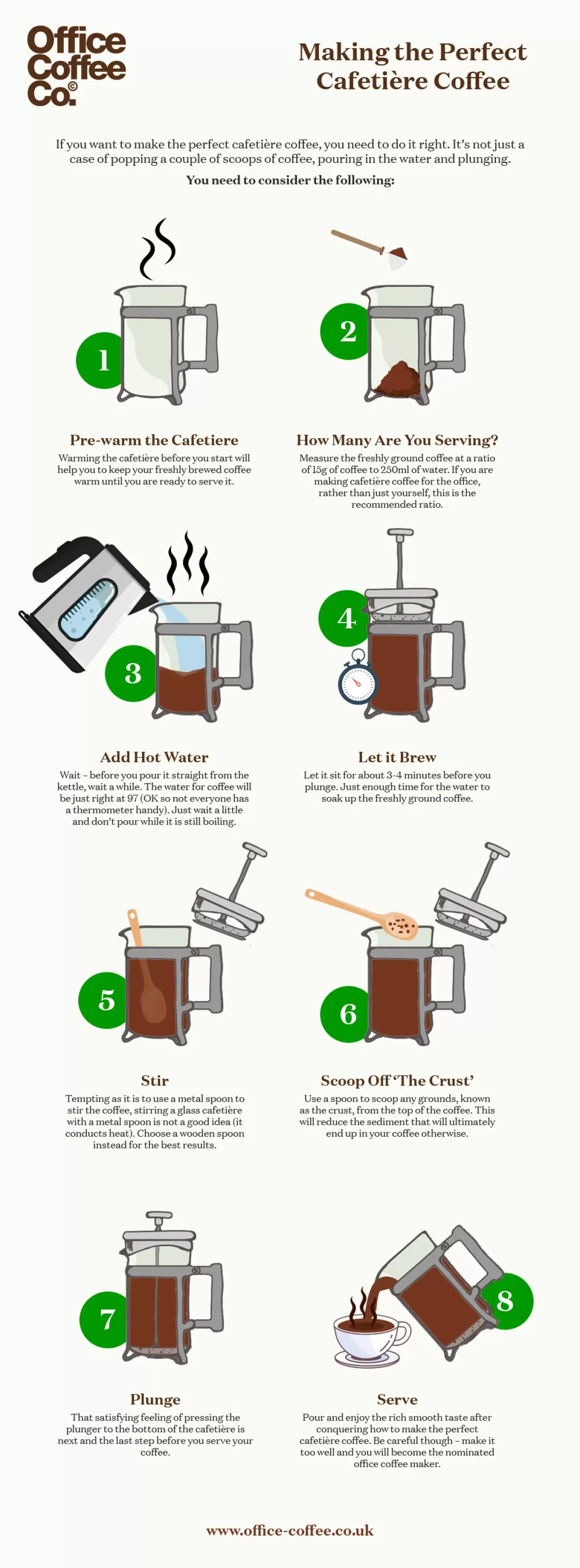
When it comes to how to make the perfect cafetière coffee, there is a process. It’s not just a case of popping a couple of scoops of coffee, pouring in the water and plunging. You need to consider the following:
Step 1 - Pre-warm the Pot
Warming the cafetière before you start will help you to keep your freshly brewed coffee warm until you are ready to serve it. It’s the same with warming your teapot, your dinner plates etc.
Step 2 – How Much Coffee Per Water?
How much coffee per water you use will depend on how strong you like your coffee. If you are making it for the whole office, or a number of people, we recommend that you measure the freshly ground coffee at a ratio of 15g of coffee to 250ml of water.
If you are just making coffee for one and prefer it stronger/weaker, adjust the amount of coffee used accordingly. This is just an approximation, it really depends on the origins of your ground coffee and how strong it is.
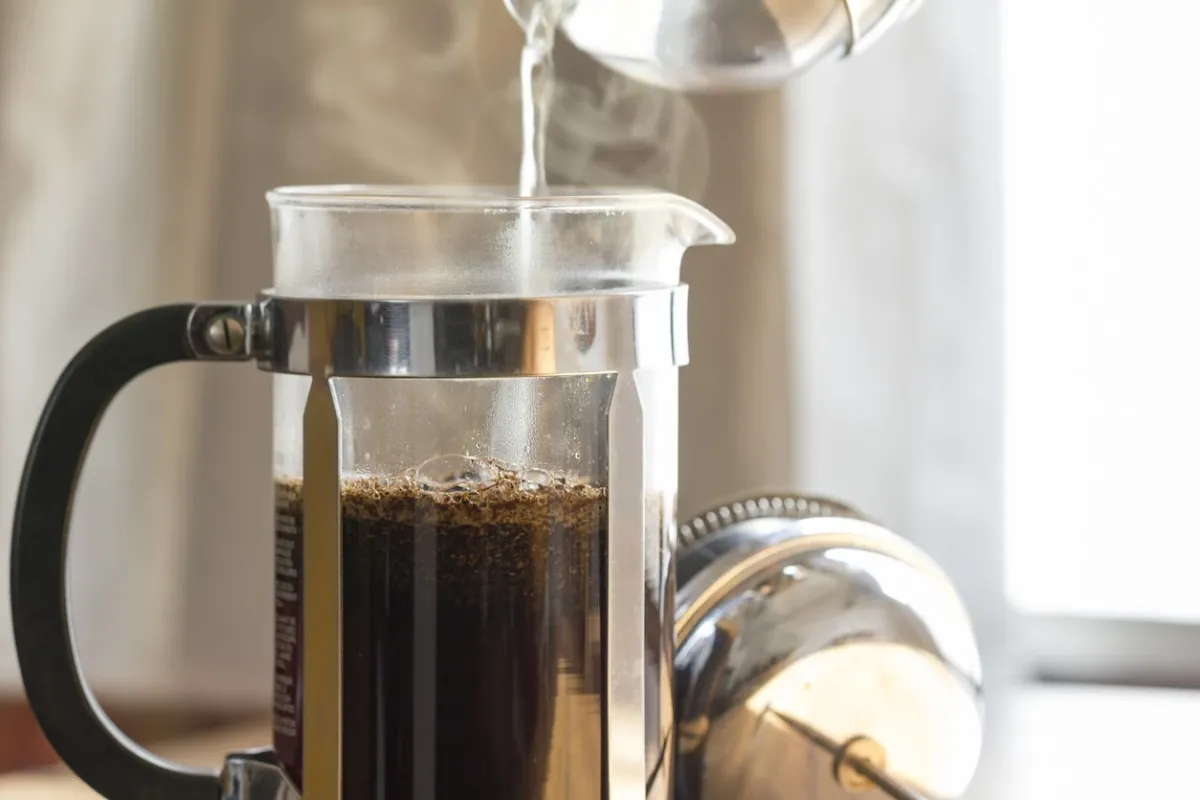
Step 3 – Add Hot Water
Wait! Before you pour the water straight from the kettle, it is best practise to wait a while. The water for coffee will be just right at 97 degrees (OK so not everyone has a thermometer handy). Just wait a little and don’t pour the water while it is still boiling. This not only makes for a better brewing method but also minimises the splashing from the boiling water.
Step 4 – How Long Should You Leave Coffee in a Cafetiere?
Four minutes is the ideal brewing time.
If you are in a rush and pour the coffee straight away, it’s not going to have chance to brew and you won’t get the full potential or that delicious tasting coffee you are waiting for. A better brewing method is to let it sit for about 3-4 minutes before you plunge. That allows just enough time for the water to soak up the freshly ground coffee.
Step 4 – Stir
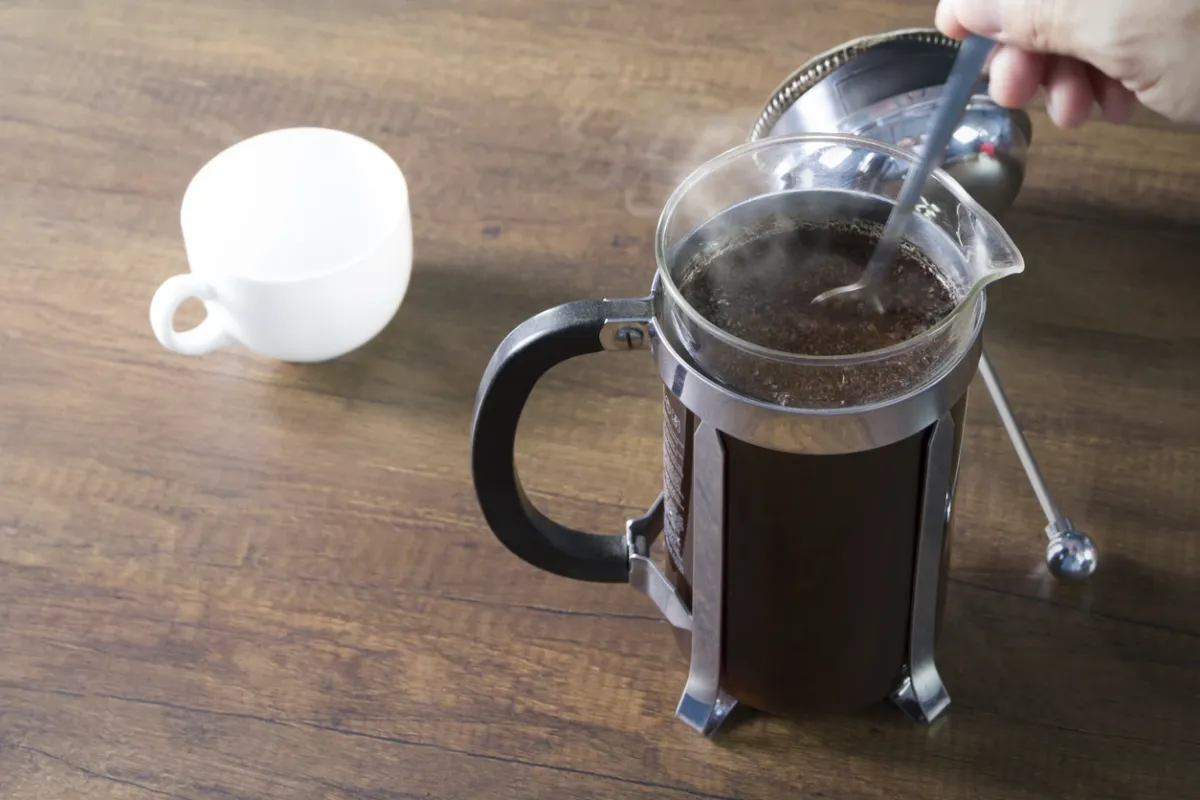
Tempting as it is to use a metal spoon to stir the coffee, stirring a glass cafetière with a metal spoon is not a good idea (it conducts heat). Choose a wooden spoon instead for the best results. Give it a good stir and let the coffee mix with the hot water.
Step 6 – Scoop Off ‘The Crust’
If you really want to get the coffee brewing method right, use a spoon to scoop any grounds from the top. This is known as the crust. Scooping the crust from the top will reduce the sediment that will ultimately end up in your coffee otherwise.
Step 7 – Plunge
Once all the steps above are completed, and have you waited the desired 3-4 minutes, then comes the final step. This is the satisfying feeling of pressing the plunger to the bottom of the cafetière and the last step before you serve, and enjoy, your coffee.
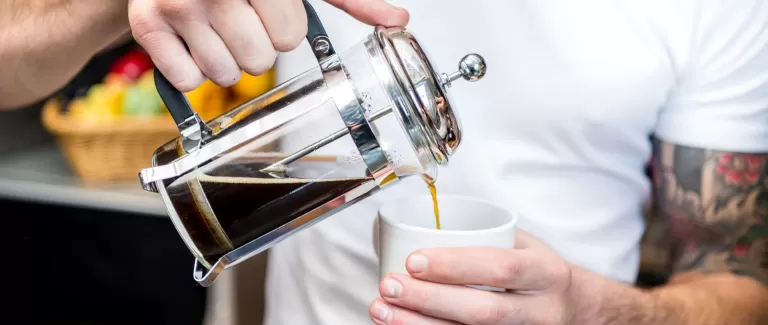
Step 8 – Serve and Enjoy
Pour and enjoy the rich smooth taste after conquering how to make the perfect cafetière coffee. Be careful though – make it too well and you will become the nominated office coffee maker. Now enjoy the delicious fruits of your labour! Why not grab a biscuit too?
Common Cafetiere Mistakes
Most problems come down to four issues:
• Incorrect coffee ratio
• Grind too fine
• Water too hot
• Brewing too long
If your coffee tastes bitter, reduce brew time or use a coarser grind.
If it tastes weak, increase the amount of coffee rather than extending brewing time.
Best Coffee for a Cafetiere
The best cafetiere coffee is:
• 100% Arabica beans
• Medium to dark roast
• Freshly roasted
• Coarse ground
Arabica beans provide smoother flavour and better balance. Medium and dark roasts work particularly well because immersion brewing enhances body and depth.
Ethically sourced coffee also matters. Fairtrade and sustainably sourced beans ensure quality while supporting responsible farming practices.
Cafetiere vs Filter vs Bean-to-Cup
Here’s how cafetiere compares to other brewing methods.
Cafetiere
• Rich and full-bodied
• Manual process
• Ideal for small batches
Filter Coffee
• Cleaner taste
• Lighter body
• Good for larger volumes
Bean-to-Cup Machines
• Consistent and automated
• Ideal for workplaces
• Barista-quality results at scale
If you are regularly making coffee for larger groups, a bean-to-cup machine provides consistency and efficiency that a cafetiere cannot match.
Getting Acquainted with Cafetière Coffee
Maybe you haven’t tried cafetière coffee yet but are tempted after reading our guide on how to make the perfect cafetière coffee. Why not check out our fabulous range of cafetières and sustainable coffee? We even have a range of teas, including herbal tea.
If you want to introduce great coffee into the workplace, you can download the Office Coffee Company brochure and pop it on your boss’s desk! If you are the boss, what are you waiting for? You can even book a coffee tasting session in your office or workplace, alternatively check out some of our ground coffee by clicking here.
Alternatively, explore our range of office coffee machines and see what’s right for your business.